Quotes, QR invoices, payment matching and the books behind a business.
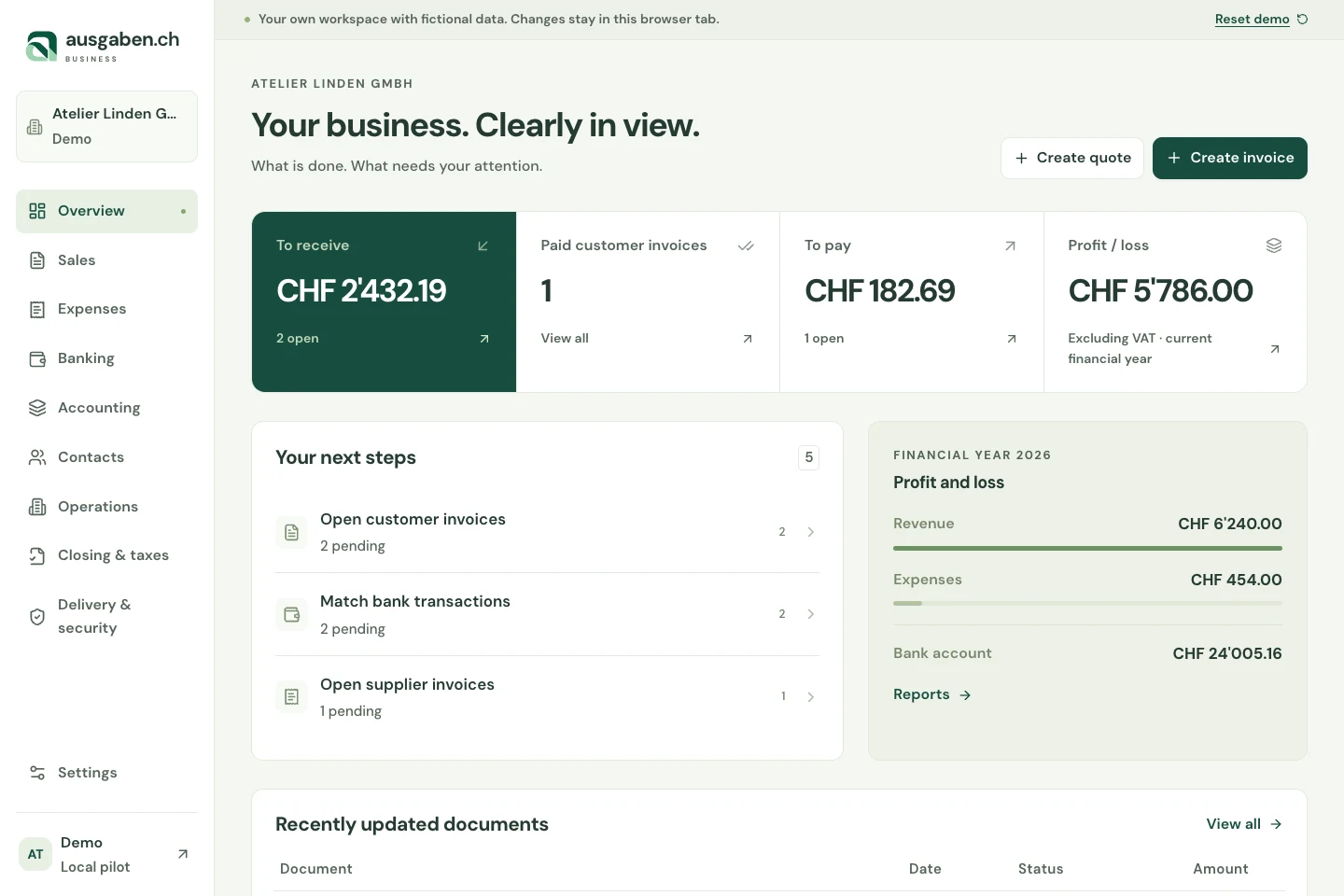
The real application in its public demo, with fictional company records. The screenshot follows the selected language.
Project overview
What it is.
Who it’s for
Swiss freelancers, service businesses and small companies that need invoicing and accounting in the same place.
Ausgaben Business brings the daily office work and accounting of a Swiss company into one application. Contacts and services carry through from a quote to an invoice, a payment and the journal. We built it as a separate product from the household finance app, with its own company workspaces, permissions and accounting records. It supports German, English, French and Italian.
Quotes, Swiss QR invoices, credit notes and supplier bills
Customer and supplier contacts, products and services
Bank-file imports, payment matching and outstanding balances
Journal, chart of accounts, financial years and VAT settings
Project budgets, time billing, stock and company access roles
Choose a customer, add catalogue items or individual services, and arrange line items, text and subtotals. Turn the quote into an invoice without entering everything again. Swiss QR invoice PDFs, credit notes and supplier bills keep the documents and their amounts connected to the same customer or supplier.
See what has been paid and what is still open.
Import bank transactions from a file, review them and match payments to invoices. Partial payments leave a visible remaining balance, while credits and reversals update the amounts due. The dashboard brings together money to collect, bills to pay and movements awaiting review. Direct bank connections are not yet activated.
Accounting with a traceable history.
The journal, chart of accounts and financial periods connect daily transactions to reports and closing work. Posted entries are preserved; corrections use linked counter-entries. VAT settings and exports support the company’s accounting process. Accountants can work from the journal and exports when reviewing the company’s figures.
The work around the numbers.
Contacts, products and services can be reused across documents. Project budgets and time records support billing, while purchasing and stock movements track the goods involved. Each company has its own records and access roles, so team members see the workspace and actions their permissions allow.
How it works.
01
Prepare the job
Choose a customer, add the services or products and prepare a quote from the company’s saved records.
02
Invoice and reconcile
Create the QR invoice, record or import the payment, and check any remaining amount.
03
Review the books
Follow the entries into the journal, check reports and prepare the records for the next accounting review.